Summer's kind of winding down, I guess, though here in coastal North Carolina, there's little sign of it. I thought, in fact, that the weather last Friday night--when our son Patrick's High School football team played their first game of the season--was more suited to a steamy twi-night baseball doubleheader or a professional mosquito rodeo than a head-knocking matchup between the Richland Wildcats and the West Carteret Patriots. We're in the south, though, so we know it's going to be hot for a good while longer. And really, this Carolina season has not been much different from the sweltering summertime days of Illinois we're accustomed to, with the special bonus of steady breezes to keep things delightful on the beach most days.
One difference, though.
One big difference.
Back home, when the temperatures climb and the humidity goes sky-high, it's not all that unusual when weather guys like Terry Swails or the ever-cheerful Andy McCray burst onto the screen right in the middle of primetime to tell viewers that it might be a good idea to duck and cover, because conditions are about right for a tornado.
Most of the time, they're just being cautious, and the storm never materializes to its fullest extent. But I'm from Galva, so I know that sometimes it does.
And so it goes.
Here on Topsail Island, my no-TV existence might have kept me temporarily, but blissfully unaware of what could be in store for us in the next couple of days, had I not been forced into a visit to civilization in the form of a doctor's waiting room on Monday afternoon.
Up on the wall was a large, flat-screen TV tuned to The Weather Channel. On the screen was my favorite weather wrangler, Jim Cantore, who was busily gesticulating at a large map filled with yellow, orange and red whorls and arrows.
It was Hurricane Irene.
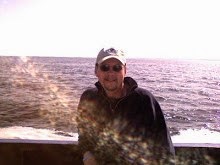
As he spoke into the camera, the picture behind him zoomed in to reveal the southeastern United States, then North Carolina, then the very stretch of barrier island coastline where we live. I strained to hear what he was saying as the beach shot incredibly grew to include a closeup of yours truly looking worriedly towards the sea.
"Self-proclaimed Illinois storm expert John Sloan will probably get a taste of some real weather this weekend," intoned Cantore. "We'll see if that homeboy has what it takes."
Well, not exactly. But you get the idea.
If I was back home in Illinois, an iffy bad-weather prediction would probably prompt me to grab a flashlight, gather a couple of candles and fill a jug with ice water in preparation for the possibility that we might have to hunker down in the basement for an hour or two.
But, if a tornado is a bad-weather event, a hurricane is an full-out festival of funky forecasts, as meteorologists spend days attempting to predict the unpredictable turns and twists the storm will take...a task not unlike trying to figure out in advance which teacups a bull set loose in a china shop will break.
The last time this island was struck hard, it was a whopper, with both Bertha and Fran making landfall in the summer and fall of 1996. The resulting maelstrom virtually swept our end of the island clean of roads, power poles, trees, sand dunes and houses, too. Needless to say, the locals are a bit edgy with the prospect of seeing it happen again.
We are, too.
Our local friends and neighbors, along with just about everyone I've run into in the supermarket, the hardware store and the fish market, have already started sharing useful bits of advice, which always end with this one:
IF IT COMES HERE, GO SOMEWHERE ELSE.
So we will, if need be. If it really does hit close, we'll have no choice, as a forced evacuation would be likely. And even if they don't make us go, I probably will, if things get rough, after hearing a friend of mine, the late Rick Appell, share his hair-raising account of riding a hurricane out in the closet of his Florida home.
But before we do, we'll need to prepare our four-floor duplex for what might happen whether we're here or not. That means, at the very least, clearing the decks and other outside areas of any furniture or other items. It means covering windows or at least opening them a bit to try and prevent them from being blown out in 100+ mph winds. And it means disposing of refrigerated perishables in the likely event of a power failure and taking all the things we truly value with us if we have to leave. There are no basements here, but most places, like ours, have a garage on the ground floor to elevate the rest of the home above flood stage. Local wisdom says I should leave the roll-up door in the front open approximately a foot, while leaving the back door of the structure wide open to allow any rushing waters to flow through freely, without damaging the structural integrity of the building. If nothing else, this seems like a dramatic way to clean out a garage, but I will do what they tell me to do, as any inexperienced rookie resident should.
So we'll wait. And wonder. And even pray a little, though I think God already knows we'd rather skip the whole thing if it's all the same to Him.
If it does strike here, we'll leave, then wait and worry about what will be waiting for us when we return.
In the meantime, stay tuned.
Goodnight, Irene.
Thursday, August 25, 2011


Thursday, August 18, 2011
Some Summer Squirbs
Note: A squirb is, if you’ll recall, a combination of a squib and a blurb, according to Mrs. Sloan’s Revised Standard Dictionary.
Is that a Shrimp Costume or am I just standing here with my fingers crossed?
You can have the bright lights of New York City, the history and culture of London and the style and sophistication of Paris. And, I no longer envy those who have visited New Orleans for Mardi Gras, Carnivale in Rio de Janeiro or the Running of the Bulls in Pamplona.
You see, I've been to the Sneads Ferry Shrimp Festival.
Sneads Ferry is an unincorporated fishing village located on the New River near its inlet into the sea, not far from our North Topsail Island digs. Its historic claim to fame has to do with the fact that it was--beginning in 1728--the site of an important ferry crossing that connected the vital Post Road (the road used to carry the mail) from Suffolk, Virginia to Charleston, South Carolina. The reason for the name "Snead" is kind of elusive, as some accounts identify Robert Snead as the owner/operator of the north shore ferry, while others state he was an attorney best known for shooting a political opponent and beating the rap after he was convicted of murder, with a pardon signed by the governor. A former slave with the rather misleading name of Caroline Pearson was the last ferryman to hand-propel the ferry, which was discontinued when a bridge was built in 1939. Celebrating a yearly shrimp festival is more than appropriate, as the village annually catches over 385 tons of shrimp, 25 tons of flounder, and approximately 493 tons of other seafood like clams, scallops, oysters, mullet, spot, grouper, soft shell and hard shell crabs, sea bass, and more.
We had been seeing the posters and billboards since our return to the area and figured we ought to go and see what there was to see (and eat what there was to eat.) We were a running a little late, so we had to kind of hustle to catch the beginning of the annual parade, which was our main goal for the day. As we approached the parade route, we could hear some absolutely splendid-sounding march music in the distance.
She: That's quite a high school band.
Me: No kidding. I wonder where they're from?
In fact it was no high school band at all, but the President's Own, a detachment of the United States Marine Corps band, doing what they do best. We were quickly reminded that Camp Lejeune, home of over 40,000 Marines and their families, is right across the aforementioned bridge. The parade continued with a beauteous, bountiful bevy of shrimp queens and princesses, along with "Mr. Shrimp," a teenaged guy who may well rue the day he accepted the title if he ever leaves home and shares that bit of personal information with others.
"You were captain of the hockey team? So what? I was Mr. Shrimp."
There were troops of Shriner clowns and squadrons of other Shriners buzzing around in little trucks and cars. There were military vehicles, fire trucks, cop cars and a full compliment of smiling, candy-tossing politicians and celebrities, like the aptly named Rookie Davis, a local high school baseball phenom who was recently drafted by the New York Yankees.
There was shrimp, shrimp and more shrimp.
And finally, just as I had almost given up hope, there was a guy strutting proudly down the street in a giant shrimp costume.
Life is good.
=====
Thome is my homie.
Jim Thome did it.
The East Peoria native hit his 600th home run Monday night, reaching that amazing career milestone in the second fewest at-bats ever, behind only Babe Ruth. It would seem to make him a virtual shoo-in for the Hall of Fame, which is a good thing. A very good thing.
You see, besides being a prodigious hitter who slugged his way through the steroid era without taking performance-enhancing drugs himself, Thome seems, by all accounts, to be a truly good guy.
He’s won the Clemente Award. He’s won the Gehrig Award. He has been voted the nicest guy in baseball.
And while a pleasing personality shouldn't have to be a requirement for entry into the hall, it's nice when it works out that way.
Well done, number 25.
======
Home, home on the beach.
There was an extra-special sighting on Topsail Beach last week. It was, in my opinion, better than whales, better than dolphins and even better than turtles, if that can be believed.
It was Sloans.
Son and daughter-in-law Colin and Geri, along with our granddaughter Setira, made the jaunt from their home near Fargo, North Dakota, a drive of some 1600 miles, but light years apart in terms of weather and scenery.
It was Setira's first glimpse of the Atlantic Ocean, a wondrous thing for a water-loving 13-year-old. Add the real-life turtle hatching she and her grandma witnessed, and it was near-nirvana for both of them. It was the first time, too, that we had the majority of the family--kids and grandkids alike--under the same roof since Christmas.
We cooked and ate and laughed and talked and played and spent time enjoying the sheer nearness of each other.
The grandma-lady and I know that the distances involved make it a tough thing for us all to get together very often. We know it's not easy in a world filled with busy lives and four dollar gasoline. So, we appreciate the fact that, one more time, it happened.
A family.
Together.
More than priceless.
Magic.
Is that a Shrimp Costume or am I just standing here with my fingers crossed?
You can have the bright lights of New York City, the history and culture of London and the style and sophistication of Paris. And, I no longer envy those who have visited New Orleans for Mardi Gras, Carnivale in Rio de Janeiro or the Running of the Bulls in Pamplona.
You see, I've been to the Sneads Ferry Shrimp Festival.
Sneads Ferry is an unincorporated fishing village located on the New River near its inlet into the sea, not far from our North Topsail Island digs. Its historic claim to fame has to do with the fact that it was--beginning in 1728--the site of an important ferry crossing that connected the vital Post Road (the road used to carry the mail) from Suffolk, Virginia to Charleston, South Carolina. The reason for the name "Snead" is kind of elusive, as some accounts identify Robert Snead as the owner/operator of the north shore ferry, while others state he was an attorney best known for shooting a political opponent and beating the rap after he was convicted of murder, with a pardon signed by the governor. A former slave with the rather misleading name of Caroline Pearson was the last ferryman to hand-propel the ferry, which was discontinued when a bridge was built in 1939. Celebrating a yearly shrimp festival is more than appropriate, as the village annually catches over 385 tons of shrimp, 25 tons of flounder, and approximately 493 tons of other seafood like clams, scallops, oysters, mullet, spot, grouper, soft shell and hard shell crabs, sea bass, and more.
We had been seeing the posters and billboards since our return to the area and figured we ought to go and see what there was to see (and eat what there was to eat.) We were a running a little late, so we had to kind of hustle to catch the beginning of the annual parade, which was our main goal for the day. As we approached the parade route, we could hear some absolutely splendid-sounding march music in the distance.
She: That's quite a high school band.
Me: No kidding. I wonder where they're from?
In fact it was no high school band at all, but the President's Own, a detachment of the United States Marine Corps band, doing what they do best. We were quickly reminded that Camp Lejeune, home of over 40,000 Marines and their families, is right across the aforementioned bridge. The parade continued with a beauteous, bountiful bevy of shrimp queens and princesses, along with "Mr. Shrimp," a teenaged guy who may well rue the day he accepted the title if he ever leaves home and shares that bit of personal information with others.
"You were captain of the hockey team? So what? I was Mr. Shrimp."
There were troops of Shriner clowns and squadrons of other Shriners buzzing around in little trucks and cars. There were military vehicles, fire trucks, cop cars and a full compliment of smiling, candy-tossing politicians and celebrities, like the aptly named Rookie Davis, a local high school baseball phenom who was recently drafted by the New York Yankees.
There was shrimp, shrimp and more shrimp.
And finally, just as I had almost given up hope, there was a guy strutting proudly down the street in a giant shrimp costume.
Life is good.
=====
Thome is my homie.
Jim Thome did it.
The East Peoria native hit his 600th home run Monday night, reaching that amazing career milestone in the second fewest at-bats ever, behind only Babe Ruth. It would seem to make him a virtual shoo-in for the Hall of Fame, which is a good thing. A very good thing.
You see, besides being a prodigious hitter who slugged his way through the steroid era without taking performance-enhancing drugs himself, Thome seems, by all accounts, to be a truly good guy.
He’s won the Clemente Award. He’s won the Gehrig Award. He has been voted the nicest guy in baseball.
And while a pleasing personality shouldn't have to be a requirement for entry into the hall, it's nice when it works out that way.
Well done, number 25.
======
Home, home on the beach.
There was an extra-special sighting on Topsail Beach last week. It was, in my opinion, better than whales, better than dolphins and even better than turtles, if that can be believed.
It was Sloans.
Son and daughter-in-law Colin and Geri, along with our granddaughter Setira, made the jaunt from their home near Fargo, North Dakota, a drive of some 1600 miles, but light years apart in terms of weather and scenery.
It was Setira's first glimpse of the Atlantic Ocean, a wondrous thing for a water-loving 13-year-old. Add the real-life turtle hatching she and her grandma witnessed, and it was near-nirvana for both of them. It was the first time, too, that we had the majority of the family--kids and grandkids alike--under the same roof since Christmas.
We cooked and ate and laughed and talked and played and spent time enjoying the sheer nearness of each other.
The grandma-lady and I know that the distances involved make it a tough thing for us all to get together very often. We know it's not easy in a world filled with busy lives and four dollar gasoline. So, we appreciate the fact that, one more time, it happened.
A family.
Together.
More than priceless.
Magic.
Thursday, August 11, 2011
Welcome to Possum Dance
Approximately 216 miles after we started, we had our fill of the Federal Interstate HIghway System. Now, this in itself is no surprise, nor any kind of a record. As many readers know, I'd just as soon skip the big roads altogether, unless I'm evacuating after a nuclear attack or moving troops to defend against an invading foreign army. Those were, after all, the original reasons for the cross-country road system designed back in the days of the Eisenhower administration.
The only reason we were heading east on I-74 in the first place was that we were in a bit of a hurry to get back to our part-time home in North Carolina. Son Colin and his crew were heading that way from Minnesota, so we were anxious to get there and spend as much time as possible with both of our sons and their families. I had talked my spouse/co-pilot/commander-in-chief into letting me take the slightly longer "southern route," which travels down through Kentucky and Tennessee before crossing the Appalachians near the beautiful Great Smoky Mountains National Park, but that minor concession to sightseeing was it.
"I want to get there," she said.
And so did I.
216 miles later, though, we realized a mid-day start was apt to cause us to hit Indianapolis during rush hour, which is no real picnic anytime, and even worst during the annual summertime construction season.
"Let's cut south sooner," she said, after a long, hard look at a map.
I, of course, was quick to agree with a plan--and route--that might take me closer to the downtown squares, small-town parks and mom-and-pop hotdog stands that make off-the-beaten-track travel so rewarding. And while I didn't get an onion-coated chili dog out of the deal, I did enjoy that portion of the ride.
Especially the names.
The tradition of town names in America is a mixed and fancy one. Many--especially out east, I think--are named after historical events or famous people. "Washington," in fact, remains the number one town name in the U.S. But, as you get further into the midsection of the country, those names seem to take on a slightly more quirky, more localized kind of tone.
"Who do you think names these places," I said, right after we had driven past the town of Raccoon, which is just a few miles west of the delightfully named Roachdale.
Now, before it sounds like I'm making fun of these colorful monickers, let me remind you that I hail from Galva, a town that first thanked and honored the nearby Bishop Hill Swedes by letting them name the place, then promptly dissed them by immediately refusing to spell or pronounce it correctly (the original name, Gavle, is pronounced "ya-vlay.") Kewanee is, according to legend, named after a wild chicken, while Lafayette (my favorite) was reputedly named after a guy named Lafe Dunbar, not the French-born Revolutionary War hero.
Our journey continued through Brick Chapel, which has one, and Carp, where there is nary a lake, pond or fish-bearing river in sight. We didn't see Cataract, though we came close, and I was forcefully prevented from detouring through Hindustan (yes, Hindustan, Indiana) a name which continues to haunt and mystify me, though I can find no online information on it other than its spot on the map.
"Really," I said. "How do they come up with these names?"
Just then, we came to a slightly wider spot in the road, where an oncoming Chevy pickup and a couple of extra houses prompted me to slow down a bit.
Just ahead, an opossum waddled out from the underbrush. The unlovely little critter must have been a more highly evolved member of his breed, because instead of simply standing still and waiting to be squished, he jittered his way into a little back-and-forth jig that neatly avoided the tires of the oncoming truck.
More than anything, it looked like young Mr. Possum was dancing the cha-cha, a sight that we both appreciated as I slowed to a stop to let him pass.
"That's how," she said. "Welcome. Welcome to Possum Dance."
The only reason we were heading east on I-74 in the first place was that we were in a bit of a hurry to get back to our part-time home in North Carolina. Son Colin and his crew were heading that way from Minnesota, so we were anxious to get there and spend as much time as possible with both of our sons and their families. I had talked my spouse/co-pilot/commander-in-chief into letting me take the slightly longer "southern route," which travels down through Kentucky and Tennessee before crossing the Appalachians near the beautiful Great Smoky Mountains National Park, but that minor concession to sightseeing was it.
"I want to get there," she said.
And so did I.
216 miles later, though, we realized a mid-day start was apt to cause us to hit Indianapolis during rush hour, which is no real picnic anytime, and even worst during the annual summertime construction season.
"Let's cut south sooner," she said, after a long, hard look at a map.
I, of course, was quick to agree with a plan--and route--that might take me closer to the downtown squares, small-town parks and mom-and-pop hotdog stands that make off-the-beaten-track travel so rewarding. And while I didn't get an onion-coated chili dog out of the deal, I did enjoy that portion of the ride.
Especially the names.
The tradition of town names in America is a mixed and fancy one. Many--especially out east, I think--are named after historical events or famous people. "Washington," in fact, remains the number one town name in the U.S. But, as you get further into the midsection of the country, those names seem to take on a slightly more quirky, more localized kind of tone.
"Who do you think names these places," I said, right after we had driven past the town of Raccoon, which is just a few miles west of the delightfully named Roachdale.
Now, before it sounds like I'm making fun of these colorful monickers, let me remind you that I hail from Galva, a town that first thanked and honored the nearby Bishop Hill Swedes by letting them name the place, then promptly dissed them by immediately refusing to spell or pronounce it correctly (the original name, Gavle, is pronounced "ya-vlay.") Kewanee is, according to legend, named after a wild chicken, while Lafayette (my favorite) was reputedly named after a guy named Lafe Dunbar, not the French-born Revolutionary War hero.
Our journey continued through Brick Chapel, which has one, and Carp, where there is nary a lake, pond or fish-bearing river in sight. We didn't see Cataract, though we came close, and I was forcefully prevented from detouring through Hindustan (yes, Hindustan, Indiana) a name which continues to haunt and mystify me, though I can find no online information on it other than its spot on the map.
"Really," I said. "How do they come up with these names?"
Just then, we came to a slightly wider spot in the road, where an oncoming Chevy pickup and a couple of extra houses prompted me to slow down a bit.
Just ahead, an opossum waddled out from the underbrush. The unlovely little critter must have been a more highly evolved member of his breed, because instead of simply standing still and waiting to be squished, he jittered his way into a little back-and-forth jig that neatly avoided the tires of the oncoming truck.
More than anything, it looked like young Mr. Possum was dancing the cha-cha, a sight that we both appreciated as I slowed to a stop to let him pass.
"That's how," she said. "Welcome. Welcome to Possum Dance."
Thursday, August 4, 2011
Hot Times
"As he stepped outside, he realized the town was completely silent except for the distant hum of air conditioners."
It's been like that lately.
It's been a hot, dry Illinois July, where even a drive in the country in search of a cooling breeze provides little more that a keening, whistling, whispering combination of hot air, the mid-summer sound of locusts and the soft, papery rustle of the corn.
It's hot. Darn hot.
And as I am an American male between the ages of three and 114, I am required by some unwritten law to talk about it.
But it's more than talk around here, where the weather is an essential part of the risky business our farmers live through and endure year after year.
"Did you get enough rain last night?"
The rains have been hard to come by in a month where the right amounts at the right time are absolutely vital to a good crop and a good year. Happily, we got just enough the other night. Just enough for now.
But it's hot. Real hot.
"I don't even want to go outside anymore," said one sun-loving neighbor. "It's just too hot."
It has been hot enough to make me think of the stories my mother used to tell me about the summer of 1936. A summer when the daytime temps reached 112 degrees and topped triple digits for 12 days in a row in parts of Illinois. A summer before air conditioning or even large-sized window fans. A summer when she would see families gather in the evening in the shady park across the street from the house where I live now to spread sheets and spend the night away from stifling homes and bedrooms that had become impossible to endure.
No, it's not that hot. But it's hot. Very hot.
The rains that gave temporary respite to the crops did little to revive lawns that have all but given up in the sunny spots. I finally gave in to a misplaced sense of homeowner responsibility and mowed the other evening for the first time in a couple of weeks, mostly because I thought I'd better knock down some of the weeds that, in their infinite toughness, have begun to overtake the heat-dormant grass. I felt the crunch-crunch-crunch of the growing patches of light brown stuff that now threaten to cover the front yard where the now-missing big tree on the corner used to provide shelter and shade.
The heat wave that has troubled us has made its presence known further north as well. On our recent camping trip up into Wisconsin and the northernmost parts of the Upper Peninsula of Michigan, 90-degree days followed us into an area where summertime high temperatures in the low 70s are the norm and nighttime lows in the 50s are not uncommon. It's a part of the country where central air conditioning is often considered an unnecessary luxury; where the hot, humid conditions we consider normal, if not entirely welcome, are almost too much to bear for the folks who live there year round.
"It's dat hew-midity," they said, over and over in the rich Upper Peninsula accent known as the Yooper dialect. "Dats what makes it so hot, eh?"
We met one woman, a state park gift shop volunteer, who had a solution, however. She was a nice, soft-spoken lady of a certain age, who might have been home baking cookies for a bunch of loving grandchildren if she had not been donating her time selling postcards and mosquito repellant and ice to a bunch of sweaty tourist. As we chatted with her, the topic, naturally, turned to the weather, which had, by turns, been sultry and stuffy and stormy. I mentioned how many complaints we had heard along the way.
"Do you know what I say?" she said sweetly. We both leaned in a bit, not wanting to miss the pearls of wisdom about to be shared.
"JUST SUCK IT UP. THAT'S WHAT I TELL 'EM," she barked. "JUST SUCK IT UP."
We reeled back a bit, realizing that this was one person who had had her fill with complaints about a condition that couldn't be changed anyway. I tried gamely to lighten the mood a bit and mentioned some of our North Carolina friends who panic at the sight of a few flakes of snow, thinking a resident of a land that sees, on average, just about 12 feet of the white stuff every season, might find it a little humorous.
"THEY JUST NEED TO SUCK IT UP," she bellowed. "JUST SUCK IT UP."
We saw, clearly, that weather was a topic to be avoided, so we quickly made our purchases and shuffled back to the car with our postcards and ice.
The hot, humid conditions were waiting for us when we returned. I realized just how hot and humid when I heard my spouse talking on the phone with an out-of-state friend the other day.
"How hot is it?" she said. "It's so hot, John even turned on The Big Scamp in the front room.
The Big Scamp is an ancient, hulking 220-volt air conditioning unit mounted more or less permanently in a transom over a side door in our front room. Living, as we do, in an old house with an equally-ancient steam heating system, central air has never been an easy option. So we've depended on The Big Scamp and other, smaller window units to cool our living areas when high ceilings and ceiling fans don't do the trick. I usually hesitate to do so unless we're pretty desperate, because I think it's probably pretty expensive to run it very often. When turned on, it makes a loud humming noise, roughly equivalent to a squadron of P-38 fighters approaching an aircraft carrier over the South Pacific. When in action, it drowns out conversations, drips buckets of water from its outside grillwork and makes the windows in our front room rattle and buzz.
But boy can that sucker cool things down.
It's been there since we bought the house in the mid-80s, and I've always dreaded the day when I'd have to deal with its demise. Quite frankly, I just hoped it would outlive me.
No such luck.
Last week, just as we were preparing for our usual Thursday night gathering of some friends, it quit with a sudden rattle and a ominous buzzing noise.
I tried a few handyman tricks, including resting it, turning it on and off, resetting the breaker and swatting it firmly on the side.
No dice.
She: Can we get someone to fix it?
Me: Not unless Alley Oop is making service calls.
The thing really is ancient, you see. In fact, a little research showed that Sears hasn't even sold the Coldspot brand since the mid-70s, and I doubt if it was new then. I've always been amazed that it still ran. Now I'm absolutely devastated to find that it doesn't anymore.
We're planning on departing again for grandkid-land this week, so I probably won't deal with it until we return.
But I will have to do something, as its absence leaves much of our downstairs as hot and humid as a haymow on an August afternoon.
Maybe it can be fixed, but I'm not overly optimistic. And really, it doesn't owe me a thing, so I've got no complaints. Replacing it will be a hard, moderately dangerous, up-on-a-tall-ladder process that will probably force me into my least-favorite form of exercise--writing a largish check.
But one way or another, I guess I've just got to follow some advice I received from a woman who knew what she was talking about.
Just suck it up.
It's been like that lately.
It's been a hot, dry Illinois July, where even a drive in the country in search of a cooling breeze provides little more that a keening, whistling, whispering combination of hot air, the mid-summer sound of locusts and the soft, papery rustle of the corn.
It's hot. Darn hot.
And as I am an American male between the ages of three and 114, I am required by some unwritten law to talk about it.
But it's more than talk around here, where the weather is an essential part of the risky business our farmers live through and endure year after year.
"Did you get enough rain last night?"
The rains have been hard to come by in a month where the right amounts at the right time are absolutely vital to a good crop and a good year. Happily, we got just enough the other night. Just enough for now.
But it's hot. Real hot.
"I don't even want to go outside anymore," said one sun-loving neighbor. "It's just too hot."
It has been hot enough to make me think of the stories my mother used to tell me about the summer of 1936. A summer when the daytime temps reached 112 degrees and topped triple digits for 12 days in a row in parts of Illinois. A summer before air conditioning or even large-sized window fans. A summer when she would see families gather in the evening in the shady park across the street from the house where I live now to spread sheets and spend the night away from stifling homes and bedrooms that had become impossible to endure.
No, it's not that hot. But it's hot. Very hot.
The rains that gave temporary respite to the crops did little to revive lawns that have all but given up in the sunny spots. I finally gave in to a misplaced sense of homeowner responsibility and mowed the other evening for the first time in a couple of weeks, mostly because I thought I'd better knock down some of the weeds that, in their infinite toughness, have begun to overtake the heat-dormant grass. I felt the crunch-crunch-crunch of the growing patches of light brown stuff that now threaten to cover the front yard where the now-missing big tree on the corner used to provide shelter and shade.
The heat wave that has troubled us has made its presence known further north as well. On our recent camping trip up into Wisconsin and the northernmost parts of the Upper Peninsula of Michigan, 90-degree days followed us into an area where summertime high temperatures in the low 70s are the norm and nighttime lows in the 50s are not uncommon. It's a part of the country where central air conditioning is often considered an unnecessary luxury; where the hot, humid conditions we consider normal, if not entirely welcome, are almost too much to bear for the folks who live there year round.
"It's dat hew-midity," they said, over and over in the rich Upper Peninsula accent known as the Yooper dialect. "Dats what makes it so hot, eh?"
We met one woman, a state park gift shop volunteer, who had a solution, however. She was a nice, soft-spoken lady of a certain age, who might have been home baking cookies for a bunch of loving grandchildren if she had not been donating her time selling postcards and mosquito repellant and ice to a bunch of sweaty tourist. As we chatted with her, the topic, naturally, turned to the weather, which had, by turns, been sultry and stuffy and stormy. I mentioned how many complaints we had heard along the way.
"Do you know what I say?" she said sweetly. We both leaned in a bit, not wanting to miss the pearls of wisdom about to be shared.
"JUST SUCK IT UP. THAT'S WHAT I TELL 'EM," she barked. "JUST SUCK IT UP."
We reeled back a bit, realizing that this was one person who had had her fill with complaints about a condition that couldn't be changed anyway. I tried gamely to lighten the mood a bit and mentioned some of our North Carolina friends who panic at the sight of a few flakes of snow, thinking a resident of a land that sees, on average, just about 12 feet of the white stuff every season, might find it a little humorous.
"THEY JUST NEED TO SUCK IT UP," she bellowed. "JUST SUCK IT UP."
We saw, clearly, that weather was a topic to be avoided, so we quickly made our purchases and shuffled back to the car with our postcards and ice.
The hot, humid conditions were waiting for us when we returned. I realized just how hot and humid when I heard my spouse talking on the phone with an out-of-state friend the other day.
"How hot is it?" she said. "It's so hot, John even turned on The Big Scamp in the front room.
The Big Scamp is an ancient, hulking 220-volt air conditioning unit mounted more or less permanently in a transom over a side door in our front room. Living, as we do, in an old house with an equally-ancient steam heating system, central air has never been an easy option. So we've depended on The Big Scamp and other, smaller window units to cool our living areas when high ceilings and ceiling fans don't do the trick. I usually hesitate to do so unless we're pretty desperate, because I think it's probably pretty expensive to run it very often. When turned on, it makes a loud humming noise, roughly equivalent to a squadron of P-38 fighters approaching an aircraft carrier over the South Pacific. When in action, it drowns out conversations, drips buckets of water from its outside grillwork and makes the windows in our front room rattle and buzz.
But boy can that sucker cool things down.
It's been there since we bought the house in the mid-80s, and I've always dreaded the day when I'd have to deal with its demise. Quite frankly, I just hoped it would outlive me.
No such luck.
Last week, just as we were preparing for our usual Thursday night gathering of some friends, it quit with a sudden rattle and a ominous buzzing noise.
I tried a few handyman tricks, including resting it, turning it on and off, resetting the breaker and swatting it firmly on the side.
No dice.
She: Can we get someone to fix it?
Me: Not unless Alley Oop is making service calls.
The thing really is ancient, you see. In fact, a little research showed that Sears hasn't even sold the Coldspot brand since the mid-70s, and I doubt if it was new then. I've always been amazed that it still ran. Now I'm absolutely devastated to find that it doesn't anymore.
We're planning on departing again for grandkid-land this week, so I probably won't deal with it until we return.
But I will have to do something, as its absence leaves much of our downstairs as hot and humid as a haymow on an August afternoon.
Maybe it can be fixed, but I'm not overly optimistic. And really, it doesn't owe me a thing, so I've got no complaints. Replacing it will be a hard, moderately dangerous, up-on-a-tall-ladder process that will probably force me into my least-favorite form of exercise--writing a largish check.
But one way or another, I guess I've just got to follow some advice I received from a woman who knew what she was talking about.
Just suck it up.
Thursday, July 28, 2011
Miles from Nowhere
We first visited the Keweenaw Peninsula when we were near-newlyweds, almost 39 years ago, and we always said we'd go back again someday. But we were foiled by time and circumstance and by the knowledge that it is a place that is absolutely on the way to nowhere. It is a wilderness of water and deep woods that pokes straight upwards into Lake Superior on the western end of the Upper Peninsula of Michigan. You can get there from here, but you can't get anywhere else once you've arrived. You can only turn around and head home again.
And while its existential beauty and magnificent ruggedness made it a place we've yearned to see and experience again, its sheer remoteness has always made it a tough call in a life filled with other responsibilities, desires and opportunities.
In the past couple of years, though, we've started making a little more effort to revisit some of those special places and people we've known in the past. It's not exactly a "bucket list," because we are re-experiencing rather than trying something new. I guess I like to think of it more as a reunion tour, where we, like a pair of "experienced" rock-and-rollers, go and revisit our greatest hits of the past.
But anyway...
We found ourselves with a little time on our hands last week. It was too hot to do some of the outdoor chores that have been tweaking my conscience, especially those involving tall ladders, brushes and oil-based exterior paint. We had been wanting to visit my sister and her family, who live further east and south along the Superior shore, so we packed the little red tent and the small mountain of gear that accompanies it and hit the road north.
Our first camping stop was at the south edge of the Keweenaw, in the aptly named Porcupine Mountains Wilderness State Park, a 60,000-acre old-growth forest that includes endless stands of ancient trees, rivers, hidden lakes and waterfalls, plus a bevy of wild critters like moose, deer, porcupines (naturally), beaver, coyotes, foxes and wolves. Oh yeah, and lots and lots of black bears.
"VISITORS MUST TAKE PRECAUTIONS TO PROTECT FOOD AND EQUIPMENT FROM THIS CURIOUS AND POTENTIALLY DANGEROUS ANIMAL," read one sign. "NEVER FEED OR APPROACH BEARS."
"Rats," I thought. "I was going to invite them over for s'mores."
We didn't encounter any big furry mammals first-hand, but were lucky enough to do the next best thing.
We met Ranger Bob.
Ranger Bob is a big, good-natured, bear-loving naturalist who took a bunch of us campers on a "bear hike" through a rough-cut wooded trail that featured an actual winter den and some visible bear tracks.
"Go ahead, stick yer head in dere," said Ranger Bob in his hearty north country accent. "Dat's his tracks."
These bits of information sort of alarmed me, as it was starting to get a little dark and we were, after all, in what Mr. Bear might well have considered his living room. But Ranger Bob seemed confident that all was well, so I stayed calm and bear-free. While we were all taken with his knowledge regarding the local bruins and their activities, we were even more impressed by Ranger Bob's ability to ignore the clouds of mosquitoes and biting flies that attacked the rest of us as soon as we entered the woods.
Me: Say, (slap) Ranger Bob, don't these (bzzzz) bugs kinda (ouch) get to you after awhile?
Later on, my nephew Jamie, who has spent considerable time in the deep woods himself, shared the secret.
"Most of those guys have some kind of special bug dope going for them," he explained. "And it helps not to bathe too much."...which goes a long ways towards explaining Ranger Bob's mostly solitary life in the deep woods.
After a glorious Lake Superior sunset, we fixed a quick campfire meal and set about getting ready for bed.
The heat wave that was broiling central Illinois had wandered into the north woods, too, so I wasn't anxious to mount the rain-resistant fly on the top of the tent, preferring to sleep under the open air mesh that forms the domed roof.
She: Do you think it will rain?
Me: Naaa, look at that sky.
She: Do you need to put that pole thing in the rain fly, just in case?
Me: Naaa, that thing just gets in the way.
The first rumble of thunder woke me up at about 3 a.m.
Cursing softly as the rain began to hit the mesh, I crawled out of the tent and searched around for the rain fly. The aforementioned "pole thing" was nowhere to be found, so I slipped the fly over the tent, crawled back inside and drifted off to sleep.
The tent started leaking in earnest at about 4 a.m.
In a humorous bit of circumstance that I totally failed to appreciate at the time, it was only dripping on my side. This was only fair, as it was the lack of "that pole thing" that was allowing the water to pool up on top of the tent before dripping in on me. Cursing a little louder, I scooched her way in an effort to stay at least partly dry until morning.
"Did it rain last night?" she said in the cheery-dreamy tones of one who has enjoyed a dry, comfortable night's sleep.
"Not so YOU'D know it," I muttered, as I headed to the bath house for my second shower of the new day.
After exploring some more of the trails and upland hills of the mountain forest, we packed up and headed further north into the actual peninsula--the region known as the "Copper Country," so named because the area was the world's greatest producer of copper from its heyday beginning in the 1840s well into the 20th century. Despite its remote location and hard, lengthy winters, the area boomed, becoming one of the first western destinations for easterners looking for work, fortune and a new life.
Eventually, most of the copper petered out, and the northern extremes of the region became a thinly populated area again, where the highest man-made structures are the old stone chimneys from the steam engines that powered the mines and the Keweenaw Snow-mometer that helps to measure an annual snowfall that can easily average over 250 inches.
"You live here, you're making a real commitment," she said as we traveled the winding, wooded highway.
We camped again. It rained again; this time with a ferocity that had us huddling in our car until it settled into a long night of wind and rain that finally broke the unnatural heat and humidity for good. We stayed dry that night, and in the morning we explored the army post established way back when copper was king and an army presence was thought to be needed to keep the peace between the miners, the settlers and the Native Americans who lived there first.
We drove a little further north along U.S. 41, a historic north-south route that goes all the way to Miami and has always been one of my favorites to drive.
Then it ended.
The highway just stops in the middle of the woods, with a simple turnaround and sign that announces the fact that you've come to the end (or beginning) of a 2000 mile stretch of highway.
There's just a woods road path leading to the big lake at the tip of the land.
"I guess we're here," she said.
And we were.
Miles from nowhere.
But it felt like home.
And while its existential beauty and magnificent ruggedness made it a place we've yearned to see and experience again, its sheer remoteness has always made it a tough call in a life filled with other responsibilities, desires and opportunities.
In the past couple of years, though, we've started making a little more effort to revisit some of those special places and people we've known in the past. It's not exactly a "bucket list," because we are re-experiencing rather than trying something new. I guess I like to think of it more as a reunion tour, where we, like a pair of "experienced" rock-and-rollers, go and revisit our greatest hits of the past.
But anyway...
We found ourselves with a little time on our hands last week. It was too hot to do some of the outdoor chores that have been tweaking my conscience, especially those involving tall ladders, brushes and oil-based exterior paint. We had been wanting to visit my sister and her family, who live further east and south along the Superior shore, so we packed the little red tent and the small mountain of gear that accompanies it and hit the road north.
Our first camping stop was at the south edge of the Keweenaw, in the aptly named Porcupine Mountains Wilderness State Park, a 60,000-acre old-growth forest that includes endless stands of ancient trees, rivers, hidden lakes and waterfalls, plus a bevy of wild critters like moose, deer, porcupines (naturally), beaver, coyotes, foxes and wolves. Oh yeah, and lots and lots of black bears.
"VISITORS MUST TAKE PRECAUTIONS TO PROTECT FOOD AND EQUIPMENT FROM THIS CURIOUS AND POTENTIALLY DANGEROUS ANIMAL," read one sign. "NEVER FEED OR APPROACH BEARS."
"Rats," I thought. "I was going to invite them over for s'mores."
We didn't encounter any big furry mammals first-hand, but were lucky enough to do the next best thing.
We met Ranger Bob.
Ranger Bob is a big, good-natured, bear-loving naturalist who took a bunch of us campers on a "bear hike" through a rough-cut wooded trail that featured an actual winter den and some visible bear tracks.
"Go ahead, stick yer head in dere," said Ranger Bob in his hearty north country accent. "Dat's his tracks."
These bits of information sort of alarmed me, as it was starting to get a little dark and we were, after all, in what Mr. Bear might well have considered his living room. But Ranger Bob seemed confident that all was well, so I stayed calm and bear-free. While we were all taken with his knowledge regarding the local bruins and their activities, we were even more impressed by Ranger Bob's ability to ignore the clouds of mosquitoes and biting flies that attacked the rest of us as soon as we entered the woods.
Me: Say, (slap) Ranger Bob, don't these (bzzzz) bugs kinda (ouch) get to you after awhile?
Later on, my nephew Jamie, who has spent considerable time in the deep woods himself, shared the secret.
"Most of those guys have some kind of special bug dope going for them," he explained. "And it helps not to bathe too much."...which goes a long ways towards explaining Ranger Bob's mostly solitary life in the deep woods.
After a glorious Lake Superior sunset, we fixed a quick campfire meal and set about getting ready for bed.
The heat wave that was broiling central Illinois had wandered into the north woods, too, so I wasn't anxious to mount the rain-resistant fly on the top of the tent, preferring to sleep under the open air mesh that forms the domed roof.
She: Do you think it will rain?
Me: Naaa, look at that sky.
She: Do you need to put that pole thing in the rain fly, just in case?
Me: Naaa, that thing just gets in the way.
The first rumble of thunder woke me up at about 3 a.m.
Cursing softly as the rain began to hit the mesh, I crawled out of the tent and searched around for the rain fly. The aforementioned "pole thing" was nowhere to be found, so I slipped the fly over the tent, crawled back inside and drifted off to sleep.
The tent started leaking in earnest at about 4 a.m.
In a humorous bit of circumstance that I totally failed to appreciate at the time, it was only dripping on my side. This was only fair, as it was the lack of "that pole thing" that was allowing the water to pool up on top of the tent before dripping in on me. Cursing a little louder, I scooched her way in an effort to stay at least partly dry until morning.
"Did it rain last night?" she said in the cheery-dreamy tones of one who has enjoyed a dry, comfortable night's sleep.
"Not so YOU'D know it," I muttered, as I headed to the bath house for my second shower of the new day.
After exploring some more of the trails and upland hills of the mountain forest, we packed up and headed further north into the actual peninsula--the region known as the "Copper Country," so named because the area was the world's greatest producer of copper from its heyday beginning in the 1840s well into the 20th century. Despite its remote location and hard, lengthy winters, the area boomed, becoming one of the first western destinations for easterners looking for work, fortune and a new life.
Eventually, most of the copper petered out, and the northern extremes of the region became a thinly populated area again, where the highest man-made structures are the old stone chimneys from the steam engines that powered the mines and the Keweenaw Snow-mometer that helps to measure an annual snowfall that can easily average over 250 inches.
"You live here, you're making a real commitment," she said as we traveled the winding, wooded highway.
We camped again. It rained again; this time with a ferocity that had us huddling in our car until it settled into a long night of wind and rain that finally broke the unnatural heat and humidity for good. We stayed dry that night, and in the morning we explored the army post established way back when copper was king and an army presence was thought to be needed to keep the peace between the miners, the settlers and the Native Americans who lived there first.
We drove a little further north along U.S. 41, a historic north-south route that goes all the way to Miami and has always been one of my favorites to drive.
Then it ended.
The highway just stops in the middle of the woods, with a simple turnaround and sign that announces the fact that you've come to the end (or beginning) of a 2000 mile stretch of highway.
There's just a woods road path leading to the big lake at the tip of the land.
"I guess we're here," she said.
And we were.
Miles from nowhere.
But it felt like home.
Thursday, July 21, 2011
Smarter than a smartphone
Make no mistake about it, there are plenty of technological advances that I've embraced completely and enthusiastically over the years. I've been computer literate--and pretty darn savvy when it comes to the internet--for quite awhile now. Even more impressively, I once successfully programmed my VCR, plus I remain the only person in the entire universe who can set the clocks in both our cars and our microwave oven without having to refer to an instruction manual or ask a teenager for help.
But this whole phone thing kind of zipped past me when I wasn't looking.
Bear in mind, I grew up in a generation where a single phone was enough for a household, while using it--especially to make a LONG DISTANCE CALL--was almost a kind of a ceremony.
But somehow, attitudes changed. So did phones.
Suddenly, it seems like every woman, man, boy, girl and cocker spaniel on the planet has his or her or its own phone, many of them so-called "smartphones" that allow the user to surf the internet, play music and games, send and receive emails and take advantage of a whole gunnysack full of applications that range from kinda handy to sorta quirky to flat-out dumb. There's even a rumor going around that they can make and receive calls, but I'm not sure they're often put to such mundane use.
That last function--talking to others--is about all the old geezer of a phone that I sometimes remember to carry can manage. That's generally fine with me, though I have to admit I was pretty impressed when a friend I was talking to recently used his to both find the best gasoline prices in the area and look up the beginning and end points of the upcoming Ragbrai bicycle ride across Iowa.
My spouse, however, has been a trifle more adventurous than me, starting with the bright red model she used her upgrade on last year that featured a pull-out QWERTY keyboard, which kind of made me wonder if she was planning on exchanging texts regarding the hunky quarterback in third period study hall. Despite its glamorous color and modern features, though, that phone turned out to be a bright-red lemon. She missed more calls than she received as the messed-up phone often sucked up its own battery reserves and died over and over and over again. I figured I was about due for a free upgrade of my own this year, so I invited her to try again, thinking this time she'd choose something dull and dependable like me, er, my phone. So I was a little surprised when she turned up her nose at a bare-bones flip phone like mine and went the bells-and-whistles route again. I guess it's not quite a full-fledged smartphone, but it has a touch screen and quite a few extra features and functions that she seems to be learning as needed or desired. I felt a little left out, in fact, as she, once again, leapt boldly into the 21st century, while I glumly lagged behind in a technological funk.
It was not until she encountered her first real problem with the phone that I was able to recover some self-esteem.
She: I can barely hear on this new phone when someone calls me.
Me: (wisely) Hmmmm.
She: I've tried turning up the volume on the earpiece, but that doesn't help.
Me: (wiser still) Hmmmm. Well, let me take a look. Maybe I can fix it.
Disgusted, she gave me the phone and stalked out of the room. I handled the thing gingerly and sort of clumsily, too, sort of like a chimpanzee who's been handed a six shooter. I was pretty sure that my usual methods for fixing things, which generally involve copious amounts of duct tape or a sharp rap with a ball-peen hammer, weren't quite what was called for.
Then, something caught my eye.
The little plastic sheet that is supposed to protect the touch screen from scratches and smudges had slid a little bit out of place. It had, in fact, slid right over the tiny ear hole on the listening end of the phone.
I slipped the sheet back into its proper position went to find her.
Me: Here, try this. I'll call you. See if it's better.
(ring)
She: Why, that's MUCH better. What did you do? How did you fix it?
Me: Ah, just adjusted the transmogrifier. Brought 'er up to spec. Let me know if you need more help.
Quickly, I made my way out of the room before she could ask for any additional demonstrations of my new-found technical abilities.
I guess someday I'll have to give up and upgrade to something newer, fancier and more up-to-date myself.
And eventually, I guess I'll have to be smart enough for a smartphone.
But for now, I'm just glad I was smart enough--just this once--to fix one.
But this whole phone thing kind of zipped past me when I wasn't looking.
Bear in mind, I grew up in a generation where a single phone was enough for a household, while using it--especially to make a LONG DISTANCE CALL--was almost a kind of a ceremony.
But somehow, attitudes changed. So did phones.
Suddenly, it seems like every woman, man, boy, girl and cocker spaniel on the planet has his or her or its own phone, many of them so-called "smartphones" that allow the user to surf the internet, play music and games, send and receive emails and take advantage of a whole gunnysack full of applications that range from kinda handy to sorta quirky to flat-out dumb. There's even a rumor going around that they can make and receive calls, but I'm not sure they're often put to such mundane use.
That last function--talking to others--is about all the old geezer of a phone that I sometimes remember to carry can manage. That's generally fine with me, though I have to admit I was pretty impressed when a friend I was talking to recently used his to both find the best gasoline prices in the area and look up the beginning and end points of the upcoming Ragbrai bicycle ride across Iowa.
My spouse, however, has been a trifle more adventurous than me, starting with the bright red model she used her upgrade on last year that featured a pull-out QWERTY keyboard, which kind of made me wonder if she was planning on exchanging texts regarding the hunky quarterback in third period study hall. Despite its glamorous color and modern features, though, that phone turned out to be a bright-red lemon. She missed more calls than she received as the messed-up phone often sucked up its own battery reserves and died over and over and over again. I figured I was about due for a free upgrade of my own this year, so I invited her to try again, thinking this time she'd choose something dull and dependable like me, er, my phone. So I was a little surprised when she turned up her nose at a bare-bones flip phone like mine and went the bells-and-whistles route again. I guess it's not quite a full-fledged smartphone, but it has a touch screen and quite a few extra features and functions that she seems to be learning as needed or desired. I felt a little left out, in fact, as she, once again, leapt boldly into the 21st century, while I glumly lagged behind in a technological funk.
It was not until she encountered her first real problem with the phone that I was able to recover some self-esteem.
She: I can barely hear on this new phone when someone calls me.
Me: (wisely) Hmmmm.
She: I've tried turning up the volume on the earpiece, but that doesn't help.
Me: (wiser still) Hmmmm. Well, let me take a look. Maybe I can fix it.
Disgusted, she gave me the phone and stalked out of the room. I handled the thing gingerly and sort of clumsily, too, sort of like a chimpanzee who's been handed a six shooter. I was pretty sure that my usual methods for fixing things, which generally involve copious amounts of duct tape or a sharp rap with a ball-peen hammer, weren't quite what was called for.
Then, something caught my eye.
The little plastic sheet that is supposed to protect the touch screen from scratches and smudges had slid a little bit out of place. It had, in fact, slid right over the tiny ear hole on the listening end of the phone.
I slipped the sheet back into its proper position went to find her.
Me: Here, try this. I'll call you. See if it's better.
(ring)
She: Why, that's MUCH better. What did you do? How did you fix it?
Me: Ah, just adjusted the transmogrifier. Brought 'er up to spec. Let me know if you need more help.
Quickly, I made my way out of the room before she could ask for any additional demonstrations of my new-found technical abilities.
I guess someday I'll have to give up and upgrade to something newer, fancier and more up-to-date myself.
And eventually, I guess I'll have to be smart enough for a smartphone.
But for now, I'm just glad I was smart enough--just this once--to fix one.
Thursday, July 14, 2011
And what a week it was
One of the biggest reasons we said goodbye to our youngest grandsons and our beautiful North Carolina beachfront to come back to the midwest for awhile was the chance to celebrate--as we always have--the Fourth of July with our friends and neighbors in Galva. It's a great day in my hometown, chocked full with events ranging from the early morning 5K race and pancake breakfast (most people don't run and eat at the same time) in the park across from our house, and continuing with highlights that conclude with Galva's amazing fireworks display, but also include the Arts Council's Art Jam and photo show, an antique tractor show and a favorite among many of our big-city friends--cow chip bingo. It's usually a big day for us, with our wraparound front porch and yard a good spot for viewing the lavish Freedom Fest parade and visiting with the many friends who find the time to stop by and say hello.
I'm usually pretty involved with the goings-on that day, with my main responsibilities being the parade, for which I have been the emcee for a number of years, and the talent show, where I've helped with announcing the contestants and setting up and running the sound system.
But this year was different.
We had discussed the fact that it might be just about time for me to back off a bit and let someone new try their hand at those duties. It's a long, pretty physical day, with equipment to move and lengthy periods spent standing in the hot July sun. My combination of creaky knees and chronic anemia relating to the cancer treatments I've undergone leave me pretty done in at the end of it, plus I've pretty much proved that I'm a washout when it comes to identifying the vintage tractors that make up a good part of the parade, and the jokes I tell between acts at the talent show have gotten sort of stale. But I didn't get around to discussing my feelings with the members of the festival committee, so I wasn't surprised when a message from parade organizer Lynda Anderson was waiting for me when we got back to Illinois.
"It's too late to bail out now," I said to my spouse. "One more year."
I called Lynda, and got some surprising news.
"We'd like you to do a different job this year," she said. "We'd like you to be Grand Marshall of the parade."
Now, according to Wikipedia, the online encyclopedia, a Grand Marshall is "a ceremonial, military, or political office of very high rank."
Who, me?
It was pretty humbling. There are any number of smart, giving, hard-working members of the Galva community who deserve that kind of honor. But having served on a few committees myself, I knew I would be doing no favors for the Freedom Fest folks if I insisted they scurry to find another honoree at the last minute.
So there I was. The Grand Marshall.
"Hello, Marshall," became a frequent greeting as the big day approached and the announcement of my upcoming honor appeared in an ultra-flattering article in The Galva News.
My spouse/fashion advisor picked out a red, white and blue plaid shirt that made me look, well, bright, and I even found some online advice on the proper way to greet the crowds along the parade route from an online source: "The Queen Wave: A hand gesture made consisting of a brief twist in the wrist, whilst the hands are neatly cupped."
It was not until the pre-Fourth pork chop supper put on by the Lutheran Church that I was reminded of the most important thing.
"Candy," said one doting grandparent friend. "My grandson wants lots of candy."
Yes, like many politicians and other self-important, so-called celebrities, I had forgotten that it's not enough to smile, wave and look like you know something.
You gotta give with the goods.
So I stocked up with a giant bagful, though I was leery of my ability to smile, wave and accurately toss bon-bons at the same time. Luckily, Jim Anderson's spiffy 1930 Model A convertible came with a valuable accessory--a trio of young ladies that included his daughter and the daughter of Star Courier editor Mike Landis. They quickly agreed to take charge of distribution from the rumble seat, while I settled into the shotgun position.
We proceeded up the Third Avenue parade route, around the park and through downtown Galva.
The girls did the important stuff.
I smiled. I waved.
Hopefully, I did it right.
Thanks, Galva.
Speaking of celebrations, we attended another gathering last week that marked an important milestone.
My cousin, Helen, turned 101.
She's my dad's first cousin, in fact, as their mothers were among the children of a Bishop Hill girl named Sophia Peterson, daughter of one of the first Swedes to reach America and the colony. Helen is the last of my dad's generation still around in my family and has always been a wonderful friend and a valuable source of family information, tales and trivia.
I got to thinking about all she's seen and lived through after we spent a little time with her the other evening.
Imagine.
She's lived through both world wars (and every war that's followed) and the Great Depression, witnessed the early days of cars, airplanes, radio and TV, and saw the introduction of a myriad of modern inventions, including pyrex, the zipper, the toaster, computers and the yo-yo. Chances are, she knew someone who actually heard Abraham Lincoln speak. For sure, she knew men who fought in the American Civil War.
Imagine.
"Be sure to drink the water at her place," said son Patrick when he heard we were going for a visit. "Maybe that's the secret."
But I think not.
Born in 1910, she just missed the Chicago Cubs' last World Series victory in 1908.
She's a big fan.
And I think she's been waiting ever since.
Happy birthday, Helen.
Speaking of grownups (I think Helen qualifies), we pursued some downright adult activities last week, as we attended not one, but two theatrical performances.
Now, while I heartily support all the arts in their various forms, I would be less than honest if I didn't admit that I think most live theatre could be improved vastly if they'd let you take in popcorn and ju-ju beans, like at the movies. So hitting two shows in a week is a tribute to both my growing maturity and the persuasive powers of my spouse.
First off was the Festival 56 production of Shakespeare's "Taming of the Shrew."
Festival 56 (named after the nearby I-80 mile marker and exit) is a professional theatre festival located in Princeton that "assembles from across the country a team of the most creative and talented artists living and working in professional theatre today." They fill the bill with seven summertime shows that include classic and world premier performances, plus free Shakespeare in the Park on Sunday and Wednesday evenings. I shocked my wife by suggesting that we attend, and we went, lawn chairs and snacks in hand, where we were treated to a fine, funny reprise of the first real live theatre production i ever attended many years ago.
it's free. It's fun.
You should go.
Next up on our whirlwind theatrical tour was the KHS production of "Annie Get Your Gun," the 1946 Irving Berlin musical that featured soon-to-be hit songs like "There's No Business Like Show Business" and "Anything You Can Do."
Now, high school theatre--especially musicals--can sometimes be a little painful, marked by inaudible, off-key singing, flubbed lines and rickety shop-class sets presented to crowds mostly limited to camera-toting grandparents, anxious moms and dozing dads. But the Kewanee kids and the adults who supported them did themselves proud, with a sharp, spirited production that featured some excellent song-and-dance numbers; elaborate, well-designed sets and an audience who really appreciated the hard work and dedication they gave to their craft.
And it, too, was free. And fun.
If you didn't go, you should have. Don't miss the next one.
I'm usually pretty involved with the goings-on that day, with my main responsibilities being the parade, for which I have been the emcee for a number of years, and the talent show, where I've helped with announcing the contestants and setting up and running the sound system.
But this year was different.
We had discussed the fact that it might be just about time for me to back off a bit and let someone new try their hand at those duties. It's a long, pretty physical day, with equipment to move and lengthy periods spent standing in the hot July sun. My combination of creaky knees and chronic anemia relating to the cancer treatments I've undergone leave me pretty done in at the end of it, plus I've pretty much proved that I'm a washout when it comes to identifying the vintage tractors that make up a good part of the parade, and the jokes I tell between acts at the talent show have gotten sort of stale. But I didn't get around to discussing my feelings with the members of the festival committee, so I wasn't surprised when a message from parade organizer Lynda Anderson was waiting for me when we got back to Illinois.
"It's too late to bail out now," I said to my spouse. "One more year."
I called Lynda, and got some surprising news.
"We'd like you to do a different job this year," she said. "We'd like you to be Grand Marshall of the parade."
Now, according to Wikipedia, the online encyclopedia, a Grand Marshall is "a ceremonial, military, or political office of very high rank."
Who, me?
It was pretty humbling. There are any number of smart, giving, hard-working members of the Galva community who deserve that kind of honor. But having served on a few committees myself, I knew I would be doing no favors for the Freedom Fest folks if I insisted they scurry to find another honoree at the last minute.
So there I was. The Grand Marshall.
"Hello, Marshall," became a frequent greeting as the big day approached and the announcement of my upcoming honor appeared in an ultra-flattering article in The Galva News.
My spouse/fashion advisor picked out a red, white and blue plaid shirt that made me look, well, bright, and I even found some online advice on the proper way to greet the crowds along the parade route from an online source: "The Queen Wave: A hand gesture made consisting of a brief twist in the wrist, whilst the hands are neatly cupped."
It was not until the pre-Fourth pork chop supper put on by the Lutheran Church that I was reminded of the most important thing.
"Candy," said one doting grandparent friend. "My grandson wants lots of candy."
Yes, like many politicians and other self-important, so-called celebrities, I had forgotten that it's not enough to smile, wave and look like you know something.
You gotta give with the goods.
So I stocked up with a giant bagful, though I was leery of my ability to smile, wave and accurately toss bon-bons at the same time. Luckily, Jim Anderson's spiffy 1930 Model A convertible came with a valuable accessory--a trio of young ladies that included his daughter and the daughter of Star Courier editor Mike Landis. They quickly agreed to take charge of distribution from the rumble seat, while I settled into the shotgun position.
We proceeded up the Third Avenue parade route, around the park and through downtown Galva.
The girls did the important stuff.
I smiled. I waved.
Hopefully, I did it right.
Thanks, Galva.
Speaking of celebrations, we attended another gathering last week that marked an important milestone.
My cousin, Helen, turned 101.
She's my dad's first cousin, in fact, as their mothers were among the children of a Bishop Hill girl named Sophia Peterson, daughter of one of the first Swedes to reach America and the colony. Helen is the last of my dad's generation still around in my family and has always been a wonderful friend and a valuable source of family information, tales and trivia.
I got to thinking about all she's seen and lived through after we spent a little time with her the other evening.
Imagine.
She's lived through both world wars (and every war that's followed) and the Great Depression, witnessed the early days of cars, airplanes, radio and TV, and saw the introduction of a myriad of modern inventions, including pyrex, the zipper, the toaster, computers and the yo-yo. Chances are, she knew someone who actually heard Abraham Lincoln speak. For sure, she knew men who fought in the American Civil War.
Imagine.
"Be sure to drink the water at her place," said son Patrick when he heard we were going for a visit. "Maybe that's the secret."
But I think not.
Born in 1910, she just missed the Chicago Cubs' last World Series victory in 1908.
She's a big fan.
And I think she's been waiting ever since.
Happy birthday, Helen.
Speaking of grownups (I think Helen qualifies), we pursued some downright adult activities last week, as we attended not one, but two theatrical performances.
Now, while I heartily support all the arts in their various forms, I would be less than honest if I didn't admit that I think most live theatre could be improved vastly if they'd let you take in popcorn and ju-ju beans, like at the movies. So hitting two shows in a week is a tribute to both my growing maturity and the persuasive powers of my spouse.
First off was the Festival 56 production of Shakespeare's "Taming of the Shrew."
Festival 56 (named after the nearby I-80 mile marker and exit) is a professional theatre festival located in Princeton that "assembles from across the country a team of the most creative and talented artists living and working in professional theatre today." They fill the bill with seven summertime shows that include classic and world premier performances, plus free Shakespeare in the Park on Sunday and Wednesday evenings. I shocked my wife by suggesting that we attend, and we went, lawn chairs and snacks in hand, where we were treated to a fine, funny reprise of the first real live theatre production i ever attended many years ago.
it's free. It's fun.
You should go.
Next up on our whirlwind theatrical tour was the KHS production of "Annie Get Your Gun," the 1946 Irving Berlin musical that featured soon-to-be hit songs like "There's No Business Like Show Business" and "Anything You Can Do."
Now, high school theatre--especially musicals--can sometimes be a little painful, marked by inaudible, off-key singing, flubbed lines and rickety shop-class sets presented to crowds mostly limited to camera-toting grandparents, anxious moms and dozing dads. But the Kewanee kids and the adults who supported them did themselves proud, with a sharp, spirited production that featured some excellent song-and-dance numbers; elaborate, well-designed sets and an audience who really appreciated the hard work and dedication they gave to their craft.
And it, too, was free. And fun.
If you didn't go, you should have. Don't miss the next one.
Subscribe to:
Posts (Atom)